Sully Booking vs OpenTable: Which Restaurant Reservation System Is Right for UK Independents in 2026?
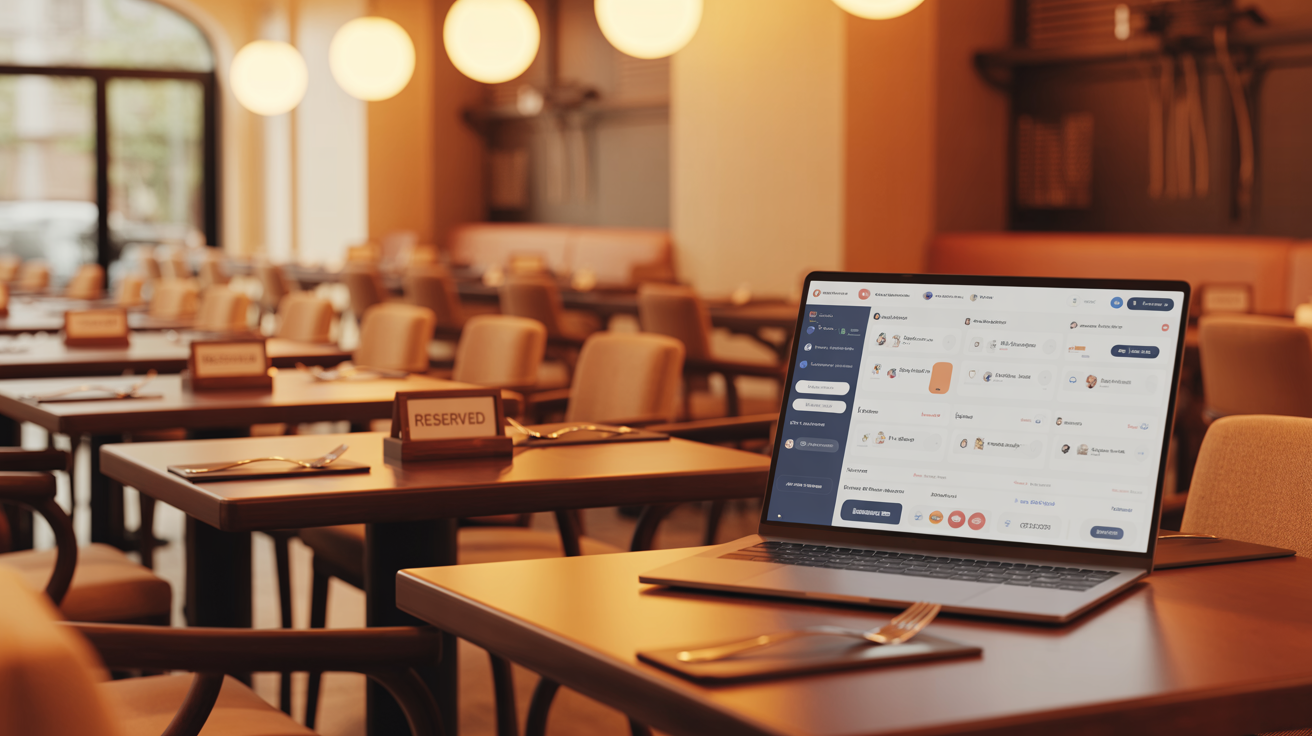
You're here because you're comparing two restaurant booking systems, and you want a straight answer: which one is actually right for your restaurant?
This is a fair comparison. OpenTable is the biggest restaurant reservation platform on the planet — it genuinely does some things brilliantly. Sully Booking is a newer UK-focused challenger with a very different commercial model. Neither is “better” in a vacuum. But one will almost certainly be better for you.
By the end of this article you'll know which one, and why — no marketing fluff, no “both have pros and cons!” non-answer. Let's get into it.
The 30-Second Verdict
If you are an independent restaurant, pub, bistro or small group (1–5 venues) in the UK or Ireland and most of your bookings already come from your own website, social media, Google search, or word of mouth — Sully Booking will save you a significant amount of money and give you more control.
If you are in a destination tourist area where a lot of your guests genuinely use the OpenTable app to discover new restaurants, and per-cover fees are a price you're willing to pay for that marketing channel — OpenTable is still a very reasonable choice.
That is the honest summary. The rest of this article shows the working.
Quick Feature & Pricing Table
| Feature | Sully Booking | OpenTable |
|---|---|---|
| Starting price | £29 / month flat | From ~£300 / month (plus fees) |
| Per-cover booking fees | None | ~£0.25 per diner (network), ~£1.00+ per diner (network booking) |
| Setup / onboarding fee | None | Can apply depending on plan |
| Contract length | Month-to-month, cancel anytime | Typically 12 months |
| Booking widget for your website | Yes, fully white-label | Yes (OpenTable branded) |
| Discovery / marketplace traffic | No (by design) | Yes — major strength |
| Guest data ownership | You own it fully | Shared with OpenTable |
| Table management & floor plans | Included | Included |
| Deposits & no-show protection | Yes, via your own Stripe account | Yes, via OpenTable's processing |
| Two-way guest messaging | Yes (email threads) | One-way notifications |
| Review platform | No — use Google / TripAdvisor | Built-in review system |
| Best for | Independent restaurants keeping costs predictable | Venues that rely on OpenTable's diner network |
Pricing based on publicly available information and customer-reported figures as of 2026. OpenTable pricing in the UK is quote-based and varies by plan tier (Basic, Core, Pro). Verify current pricing directly with OpenTable for your specific situation.
1. The Pricing Reality
This is where the two platforms diverge most dramatically, so let's do the maths with a real example.
Scenario: A neighbourhood bistro in Leeds. 60 covers per night, 6 nights a week, with 70% of those coming from reservations. That's roughly 1,000 reserved covers per month.
With OpenTable (Core plan, illustrative UK figures)
- Monthly subscription: ~£300
- Widget bookings (your website): 700 covers × £0.25 = £175
- Network bookings (OpenTable app): 300 covers × £1.00 = £300
- Total: ~£775 / month (~£9,300 / year)
With Sully Booking
- Monthly subscription: £29 (or £24 on annual)
- Per-cover fees: £0
- Setup fee: £0
- Total: £29 / month (£348 / year)
The difference is nearly £9,000 a year — enough to pay for a new oven, a month of kitchen wages, or a modest marketing campaign.
The question is whether OpenTable's diner network brings in more than £9,000 of incremental bookings that you wouldn't have got otherwise. For most independents, the honest answer is “no”. For a destination restaurant in Covent Garden with significant tourist footfall? Possibly yes.
2. Where OpenTable Genuinely Wins: The Network
Let's give credit where it's due. OpenTable has something Sully Booking will never have: a massive, global consumer brand. Tens of millions of diners open the OpenTable app when they're planning a meal out — especially in cities, and especially when travelling.
If a visitor to London is searching “best Italian near me” in the OpenTable app, they might find your restaurant through that discovery surface. You pay a per-diner fee for those bookings, but they're bookings you might not have won any other way.
That is genuine marketing value, and it's the single strongest argument for OpenTable.
But here's the honest question to ask yourself: look at your last 100 bookings. How many of them actually came from the OpenTable app specifically — as opposed to your own website, a Google search that landed on your site, Instagram, or a walk-in who booked later?
If it's a handful, OpenTable's network isn't earning its keep. If it's 30%+ of your bookings, it probably is.
3. Where Sully Booking Wins: Ownership & Simplicity
You keep your guest relationship
When a guest books via OpenTable, OpenTable owns that relationship. They have the guest's email, they send the marketing, and they can surface other restaurants to that diner in their app. That's the price of being on the platform.
With Sully Booking, every booking comes directly to you with the guest's contact details in your dashboard. You can email them, message them back-and-forth through our two-way guest messaging, and build your own mailing list that competes with nobody.
You use your own Stripe account
If you take deposits with Sully, you plug in your own Stripe credentials in Settings → Payments. All deposit revenue lands in your bank account, the next working day, exactly like your regular card sales. Sully never touches the money.
This matters for accounting, cashflow, and — crucially — it means your deposit processing fees are whatever Stripe charges you, not a marked-up rate baked into a reservation platform.
Fifteen-minute setup, no sales call
You can sign up for Sully right now, set up your venue, configure opening hours and tables, and embed the booking widget on your website inside 15 minutes. There's a demo account ([email protected] / demo123) you can poke around in first.
OpenTable typically involves a sales conversation, a custom quote, and a longer onboarding. That's fine if you want a hand-held implementation; it's a barrier if you just want to get going.
4. Feature Parity: Closer Than You Think
Here's the thing that surprises most people when they first look at Sully: the day-to-day tools are almost identical. Both platforms give you:
- A branded booking widget for your website
- A visual table plan with drag-and-drop assignment
- Email confirmations and reminders to guests
- Deposit / card capture for no-show protection
- Reporting on covers, revenue, and booking patterns
- Multi-venue support if you grow
- Custom fields (allergies, special occasions, etc.)
The operations layer — the thing your host or manager actually uses every shift — is near-identical between the two systems. You are not sacrificing functionality by choosing the cheaper option.
Where the platforms differ is the marketing layer: OpenTable has the diner-facing app, the review system, and the cross-promotion. Sully deliberately doesn't — we keep the product focused on running your restaurant, not running a diner marketplace.
5. Who Should Pick Which?
Choose OpenTable if...
- You're in a high-tourism location (central London, Edinburgh Old Town, Dublin city centre, etc.) where a meaningful share of your guests are visitors searching the OpenTable app.
- You're a fine-dining or destination restaurant whose guests specifically expect to find you on OpenTable.
- Your margins can comfortably absorb £0.25–£1.00+ per cover, and you value the platform's built-in review and marketing reach.
- You're part of a larger group that already has OpenTable standardised across sites.
Choose Sully Booking if...
- You're an independent restaurant, gastropub, cafe or bistro in the UK or Ireland.
- Most of your bookings already come through your own website, Google, or social media.
- You want predictable, flat-rate pricing that doesn't punish you for being busy.
- You want to own your guest list, run your own Stripe account, and send your own marketing.
- You don't want to sign a 12-month contract or sit through a sales call to get started.
6. Switching from OpenTable to Sully
If you're considering a move, here's the practical playbook we walk customers through:
- Set up Sully in parallel, not as a replacement. Create your account, configure your venue, and embed the Sully widget on your website as the primary booking path. Leave OpenTable running in the background.
- Run both for 30 days. This gives you real, honest data on how many bookings truly come from OpenTable's network versus your own channels.
- Review the numbers. Login to your OpenTable dashboard and pull the report that breaks bookings down by source. Count the ones tagged “OpenTable.com / App” — those are the ones you'd genuinely miss.
- Export your customer list from OpenTable before the end of your contract term. You have a right to this data.
- Notify your contract renewal window. OpenTable contracts typically require 30–60 days' notice to cancel. Put this in your calendar.
- Switch fully. Remove the OpenTable widget from your site, import your guest list into Sully, and move forward.
Most restaurants who run this experiment discover that 85–95% of their bookings were already coming from their own channels. The rest — the genuinely incremental OpenTable-app bookings — rarely justify the annual spend.
7. Frequently Asked Questions
Is OpenTable going to penalise me or lower my ranking if I also use Sully?
No. OpenTable's published policies don't restrict you from using other booking systems in parallel. Many restaurants run both for a period while they evaluate.
Will I lose my OpenTable reviews if I switch?
Your reviews on opentable.com stay on opentable.com — they're tied to their platform. This is one area where OpenTable genuinely does add review value. Many restaurants move to Google Reviews and TripAdvisor as their primary review platforms when they leave.
Can I import my existing guest list into Sully?
Yes. Export your guest database from OpenTable as a CSV, and our team can help you import it into Sully. Email [email protected] and we'll walk you through it.
Does Sully work for restaurants in Ireland?
Yes. Sully is fully supported across the UK and Ireland, with GBP and EUR currency support on deposits via your own Stripe account.
What if I have 10+ venues? Is Sully still £29 per month?
Our published £29/month plan includes multi-venue support. For groups of 10+ venues we have custom pricing — get in touch and we'll quote based on your setup.
The Bottom Line
OpenTable is not a bad product. It's a bigger, more expensive product with a diner marketplace attached. For the right type of restaurant — the destination-diner, tourist-attracting, marketing-hungry venue — it earns its fees.
But if you run an independent restaurant in the UK or Ireland and most of your bookings already come through your own front door — your website, your Instagram, your Google listing — you are almost certainly overpaying on OpenTable today.
Sully Booking gives you the same day-to-day booking tools, the same deposit protection, the same table management, at a flat £29 a month, with no per-cover penalties when you have a great night.
Run the maths with your own numbers. Check the pricing page. Try the live demo. Sign up in 15 minutes. There's a 14-day money-back guarantee if it's not right for you.